New technology helps WWF and partners study whales in one of the most remote places on the planet

New technology helps WWF and partners study whales in one of the most remote places on the planet

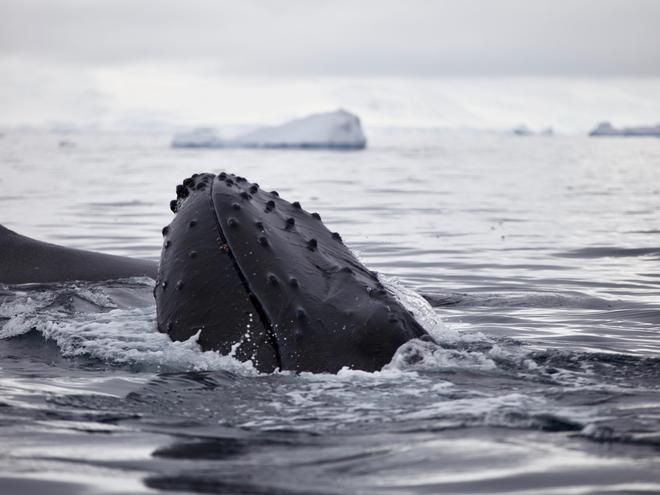
Antarctica is epic—one of Earth’s last truly wild places. And new technology is teaching us more than ever before about one of the continent’s most enchanting creatures: whales.

WWF and our partners at Duke University Marine Robotics and Remote Sensing Lab (MaRRS), Friedlaender Lab, and California Ocean Alliance are using drone photography and digital tags to better understand how and where whales in Antarctica feed, the health of their population, and how climate change is affecting them.

The Antarctic Peninsula is a crucial spot for humpback and minke whales to feed on krill—the keystone species of the Antarctic food web. Despite its minuscule size, krill feeds far larger animals, such as penguins, seals, seabirds, and fish. An ocean current flowing clockwise around the content and north up the Western Peninsula brings swarms of these critters.

However, as oceans warm and sea ice declines, krill is on the move toward lower latitudes—farther south—requiring whales to travel longer distances to feed. Unfortunately, krill fishing is concentrated in this area and overlaps with crucial feeding areas for whales and other krill-dependent species.

As climate change is impacting the region, any increased competition with a growing fishery means we need to ensure that krill is harvested responsibly in this fragile habitat.

Drones and digital tags are helping us to better track and study humpback whales—how they eat, whether they’re healthy, and how climate change impacts their lives. We’re understanding more about the distribution and habitats of other krill-dependent species with these tools, too. Seals and penguins need those tiny critters to survive and share the same resting and breeding habitats. Artificial intelligence and machine learning techniques are used in processing drone images to count local populations. They're a game-changing technology. 

Collaboration is the spirit of Antarctic science and it’s the most effective way to make an impact. Across WWF, we work with a range of research teams including University of California Santa Cruz, California Ocean Alliance, Duke University, British Antarctic Survey, Australian Antarctic Division and other partners such as tourism operators like One Ocean Expeditions working side-by-side in the field while sharing the science in action as it happens. 

The good news is governments have already committed to the creation of a network of Marine Protected Areas, an important piece of WWF’s goal to protect 30% of the Antarctic Peninsula by 2030. These Marine sanctuaries help build resilience to climate impacts and acts as an insurance policy for nature. These new technologies and innovative data allow us to make sure we can safeguard Antarctic wildlife for years to come, while we work to bring down global emissions that are causing Antarctica to warm, learn how you can reduce your carbon footprint. These new technologies and innovative data allow us to make sure we can safeguard Antarctic wildlife for years to come.

Imagery in this story collected under research permits: ACA #2015-011, #2016-024 & #2017-034; NMFS #14809; US NSF #1440435 & 1643877.


Published May 21, 2019 at 05:00AM
Just one-third of the world's longest rivers remain free-flowing

Just one-third of the world's longest rivers remain free-flowing

Only a little more than one-third of the world’s 246 longest rivers remain free-flowing, drastically reducing the diverse benefits that healthy rivers provide to people and nature everywhere, according to a new study by WWF and partners.

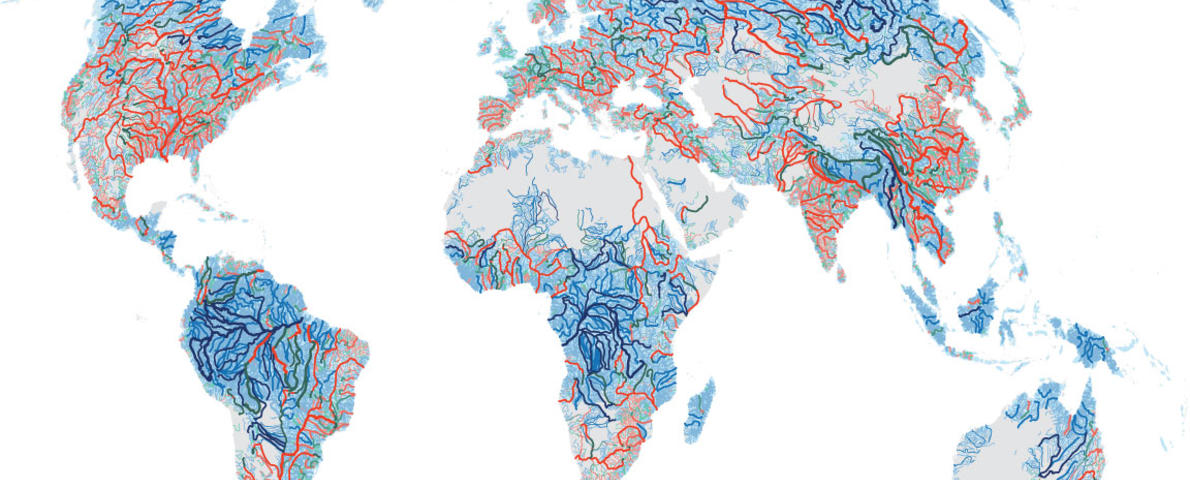
A team of researchers from WWF, McGill University, and other institutions studied about 7.5 million miles of rivers worldwide to determine whether they’re well connected. They found that only 37% are free-flowing—meaning they’re largely unaffected by human-made changes to its flow and connectivity. Dams built in the wrong place and climate change are impacting river health worldwide, and the planet’s remaining free-flowing rivers are largely restricted to remote regions of the Arctic, the Amazon Basin, and the Congo Basin.

VANISHING FREE-FLOWING RIVERS
Long free-flowing rivers are vanishing. Around the world, rivers are becoming increasingly fragmented by dams and other development—such as roads or dikes—endangering freshwater ecosystems and the people and wildlife that rely on them. Free-flowing rivers transport water, nutrients, and species that sustain biodiversity and benefit millions of people. To help countries and communities better protect their freshwater resources, WWF and partners came up with a technical definition of a free-flowing river and then created a first-of-its-kind, scientifically backed map—a comprehensive inventory of the world’s last free-flowing rivers, rivers with good connectivity and impacted rivers.

RIVER STATUS

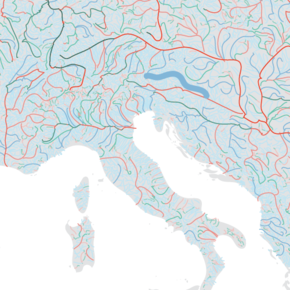
MURA RIVER
SLOVENIA
Called the “Amazon of Europe,” the Mura River provides critical habitat for endangered and rare species such as otters, Danube salmon, and black stork. After urging from WWF and others, in February 2019, the Slovenian government signed an agreement to stop all hydropower plant development that would devastate the Mura.

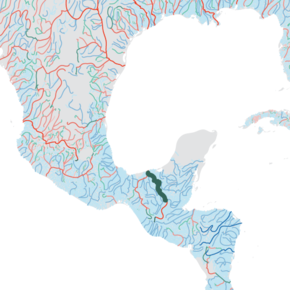
USUMACINTA RIVER
MEXICO
In June 2018, guided by WWF and partners, Mexico established water reserves across nearly 300 river basins, guaranteeing water supplies for 45 million people for the next 50 years. Ninety-three percent of the water in the Usumacinta—the longest, most biodiverse river in Central America and one of Mexico’s—is now federally protected.

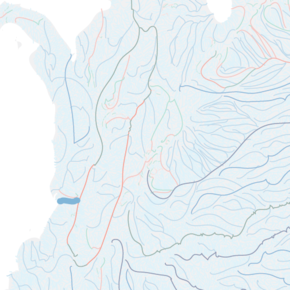
BITA RIVER
COLOMBIA
The Colombian government named the Bita River basin a Ramsar site—a wetland of international importance—in June 2018, thanks in large part to the work of WWF and partners. Covering 825,000 hectares, it’s the largest of the country’s 11 Ramsar sites and one of the few in the world to encompass an entire free-flowing river watershed.

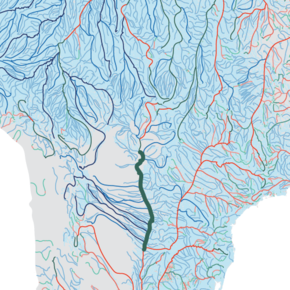
PARAGUAY BASIN
BRAZIL
More than 100 dams planned for the Upper Paraguay Basin could hurt water supplies, biodiversity, and local communities. After tremendous efforts from a coalition including WWF, Brazil’s National Water Agency suspended new dam development there until May 2020. But the suspension only applies to rivers under federal jurisdiction—so just 20 of the 100 dams will be suspended.

LUANGWA RIVER
ZAMBIA
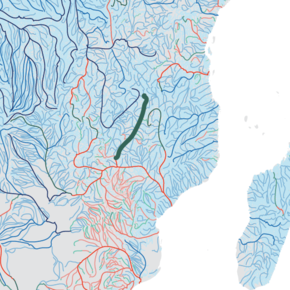
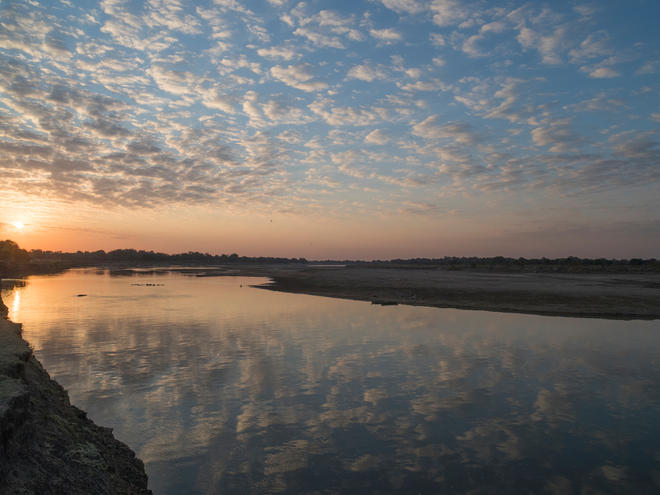
The Luangwa, which is free but impacted by a dam on a nearby river, is at risk. A proposed dam at Ndevu Gorge threatens this wild waterway, which shelters abundant wildlife and human populations. In Zambia, WWF is advocating on behalf of people and nature, pushing the government to reconsider its energy plans and ensuring that local people maintain their rights to natural resources.

IRRAWADDY AND SALWEEN RIVERS
MYANMAR
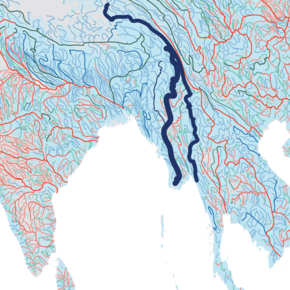
In Myanmar, an in-depth Strategic Environmental Assessment recommended that the main stems of the Irrawaddy and Salween rivers—two of the last long free-flowing rivers in southeast Asia—should remain free of dams. But there is still risk, making alternative energy such as solar and wind power even more important for people, rivers, and the country’s economy.

For more information on the study and WWF’s efforts to protect free-flowing rivers around the world, see free-flowing-rivers.org.

Free flowing rivers Infographic

FREE-FLOWING RIVERS
Download the full map >

MAPPING DAMS
Dams provide safe drinking water and electricity to millions of people. But when built in the wrong place—for instance, a river’s main stem—they can impede a river’s flow, causing drastic declines in biodiversity and affecting fish migration, agriculture, and livelihoods. Today there are more than 60,000 major dams around the world—a number that’s increasing to meet demand for hydropower. WWF is helping national governments, industries, and developers consider both the long-term impacts on local people and habitats and other potential alternative options for meeting water and energy supply needs, as well as helping them identify the best opportunities for river restoration projects. Solar and wind prices are going down, making them attractive alternatives.


Published May 09, 2019 at 05:00AM

Trailblazing women help ensure better tuna fishing in Ghana

Trailblazing women help ensure better tuna fishing in Ghana

Ocean conservation requires a solid understanding of what we’re taking out of our seas. How much fish do fishers catch? Where do they catch them? And what else are they catching along with the fish?

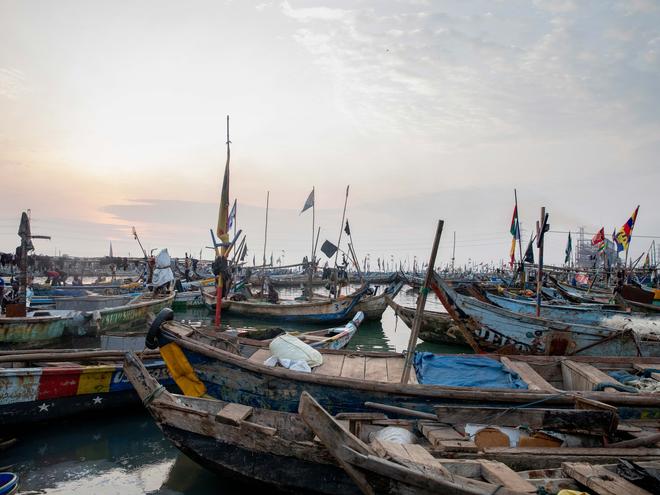
In Ghana, the government is seeking to answer those questions by collecting information digitally on tuna boats through a network of cameras, monitors, and sensors. That data provides guidance on how we can better care for our natural resources and reassures buyers that they’re getting a good catch. But that information is only useful if it’s analyzed. That’s where a few trailblazing women come in.

WWF’s Lauren Spurrier advocated for women to have access to jobs reviewing and organizing the information collected on boats—and she succeeded. Today, four of the 10 people tasked monitoring fishing in Ghana are women and this assignment provided the opportunity for them to pursue a professional future in a country with limited career opportunities. Ultimately, two of the women dedicated to the analysis work full-time accomplished 75% of the analysis.

 “As a woman, this project is an eye-opener for me,” said Agyeman Narkie Akua, an observer. “It boosts my strength because this is new, and I get to be a part of it. And in the future, I stand at a place where I can also educate other women if they have the desire to be part of something like this. We show them, ‘Hey, it’s possible.’”

WWF is working with the United Nations Food and Agriculture Organization and the Ministry of Fisheries and Aquaculture Development of Ghana to equip the purse seine tuna fleet—a collection of vessels that use lengthy nets to encircle large schools of fish—with electronic monitoring systems. Now observers like Akua can see exactly what is being taken out of the water, who is taking it, and where and when it’s happening. And it’s a safety net for vessel owners who can guarantee the market that their crews follow the rules.


Published May 02, 2019 at 05:00AM

Defending the brown bears of Bristol Bay

Defending the brown bears of Bristol Bay

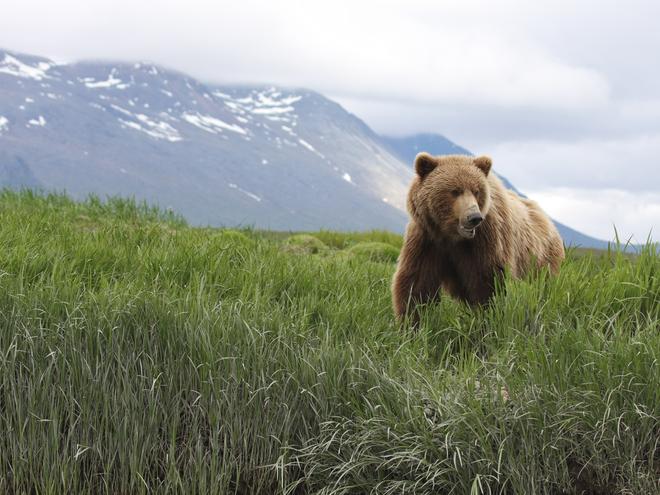
Brown bears in Alaska’s Bristol Bay region spend each year roaming the largely unspoiled land found between the coast and massive mountain-lined national parks and reserves. Standing up to a foot taller than the average human, and weighing as much as a grand piano, these bears are some of the most iconic wildlife species found in America’s great outdoors. In other parts of North America they’re called grizzly bears.

Brown bears are not listed as an endangered species—in fact, some populations are doing quite well—but in Southwest Alaska, they face an impending threat from the proposed development of an open-pit gold and copper mine.

“Bears are large creatures who need large spaces to be able to survive,” said Drew Hamilton, an  Alaska-based expedition leader with Natural Habitat Adventures who has spent more than a decade observing and photographing Alaska’s bears.

“The plans for this mine will put up barriers to movement and threaten the primary food source for brown bears—salmon.”

Bristol Bay’s brown bears spend winters hibernating in dens until emerging in springtime to graze on the region’s fresh flowers and plants, along with any appealing dead wildlife found along the way. In the summer season, salmon are a brown bear’s food of choice—and just as favored by consumers who support a $1.5 billion commercial salmon industry.

Building a big mine upstream has real potential to impact everything downstream. And what’s downstream from the proposed Pebble Mine is everything that makes up Bristol Bay. There has been bi-partisan, diverse community-led opposition to the Pebble Mine project for two decades.

Still, developers want to dig a mine one-mile-wide and quarter-mile deep. Carving out Pebble Mine would lead to the destruction of 3,000 acres of wetlands and more than 21 miles of salmon streams. The scar on Alaska’s pristine, productive environment would be visible from space.

“Where the mine plan truly hurts bears is the infrastructure associated with the mine. The proposed road corridor and the power plant would sit squarely in the middle of a route that bears use to move up and down the western shores of Cook Inlet. Development would also get in the way of the route many bears use to get across the mountains as they migrate to match seasonal fish abundance,” says Hamilton. “Any assault on salmon is an assault on bears and Alaskans.“

Bristol Bay boasts the world's largest wild salmon fishery. But what that really means is the region is home to an abundance of biodiversity. In an age of climate change and pressure to develop, it’s vital we protect these wild places.

Locals and visitors regularly spot beluga whales, humpback whales, caribou, brown bears, and moose, not to mention trees, flowers and plants of all types. Pebble Mine exposes the entire biome to a potentially toxic, uncertain future.

The US government put the permitting process on a fast-track, working even during a government shutdown. The administration released a rushed and incomplete draft environmental impact review of the plans, which is now open to public comments and review.

“The time to stop this is now,” Hamilton concluded.

Take action: Tell the Administration that Pebble Mine is too risky for the region’s brown bears, salmon and people.


Published April 30, 2019 at 05:00AM

US failing to meet Arctic protection goals

US failing to meet Arctic protection goals

Plans to expand oil and gas drilling in the United States’ Arctic hit a roadblock in the federal courts, which prompted the government to pull plans for this year. Unfortunately, the icy waters off of Alaska remain at risk—and not just from oil and gas.

Though the US government is meeting some of its commitments in the Arctic, not enough is being done and, in many instances, the government is backsliding, according to a new analysis commissioned by WWF.

First, the good news

WWF’s Arctic Council Conservation Scorecard—which scores all Arctic nations on the progress they’ve made toward Arctic Council recommendations—found that the US continues to perform well in the area of monitoring Arctic sea ice and other ecological conditions. This is important as the region continues to warm faster than any other place on Earth, creating a cascade of impacts that nature and people everywhere are forced to live with.

In December 2018, voluntary shipping routes and so-called ‘Areas to Be Avoided’ by ships went into effect in the Aleutian Islands, Bering Sea, and Bering Strait. The US and Russia agreed on the measures and ship traffic is largely respecting the rules to enhance maritime safety and protect marine areas with ecological importance and subsistence values.

But we’re still missing the mark

Aside from science and shipping, there are many instances in which the government is trying to reverse existing environmental and management standards.

Since 2017, the US government has attempted to jump-start fossil fuel exploration in the Chukchi and Beaufort seas. And even though the courts have effectively frozen such plans, the US government hasn’t given any indication that it will stop efforts to auction off areas offshore with the hopes of industry drilling more.

On paper, the US has a strategy for the Arctic but there is no mention of biodiversity-related objectives. Likewise, resilience and adaptation to climate change are also missing, directly impacting the security of indigenous and local communities in America’s Arctic.

Ultimately researchers had limited access to data and experts from the US government, which makes grading national efforts more difficult. Some government employees and agencies declined to share information due to current politics around the role of government in science and vice versa. The government shutdown in early January 2019 also likely impacted participation.

What’s next

WWF delivered the findings to Arctic Council members with a message to accelerate ambition and action to safeguard nature and people living in the Arctic.

“The future of the Arctic is being shaped by the actions taken today,” said David Aplin, director of education and outreach, WWF’s Arctic Field Program. “The people of Alaska and the environment on which communities so greatly depend are directly impacted by the shortcomings identified in the Arctic Scorecard. Governments must do more to protect biodiversity through strengthened governance and international cooperation.”


Published April 30, 2019 at 05:00AM

A “Cinderella” story in tiger conservation

A “Cinderella” story in tiger conservation

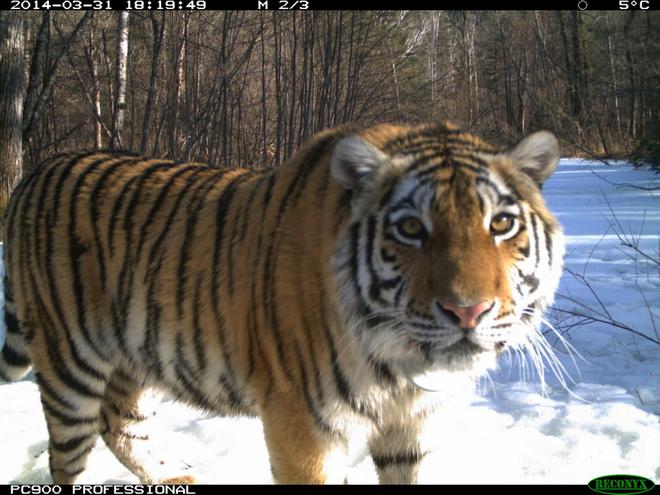
On a cold February evening in 2012, a starving and near-hypothermic Amur tiger cub was found by hunters in the forest of the Primorsky Province, Russian Far East. Aptly named Zolushka, Russian for "Cinderella", she was rehabilitated and released into the Bastak Nature Reserve the following year. Four years later, Zolushka has given birth to four cubs altogether, with the unknown gender of her fourth cub finally identified using WWF-Russia supported camera trap footage - a girl!

The significance of this female cub is of great importance to establishing a permanent tiger group in this area. Bastak Nature Reserve can host 3-4 female tigers since a female’s territory is smaller than a male’s, which can encompass the territories of 2-3 females. With a resident male already occupying the area, two of Zolushka’s male cubs have already dispersed in search of their own territories and the third male is likely to leave as well. But it is likely that the young female cub may stay in the Reserve.

"This is great news for us as the increase of females is a key to successful existence of the tiger group in Evreiskaya Province," says Alexei Kostyria, Coordinator of Rare Species Conservation Unit at WWF Russia Amur branch.

With around 3,900 tigers left in the wild, every tiger birth is a cause for celebration. WWF works with partners and governments to protect this species and restore populations in all tiger range countries.


Published April 23, 2019 at 05:00AM

What's a boreal forest? And the three other types of forests around the world

What's a boreal forest? And the three other types of forests around the world

Forests cover one-third of the world’s land surface—more than 15.3 million square miles. Within this vast area you’ll find all types of habitats, from the boreal forests of Canada to the jungles of Brazil. Every forest is different, but some share common traits based on the local climate. In fact, every forest on the planet can fit into one of four categories.

Four Types of Forests

1. Tropical
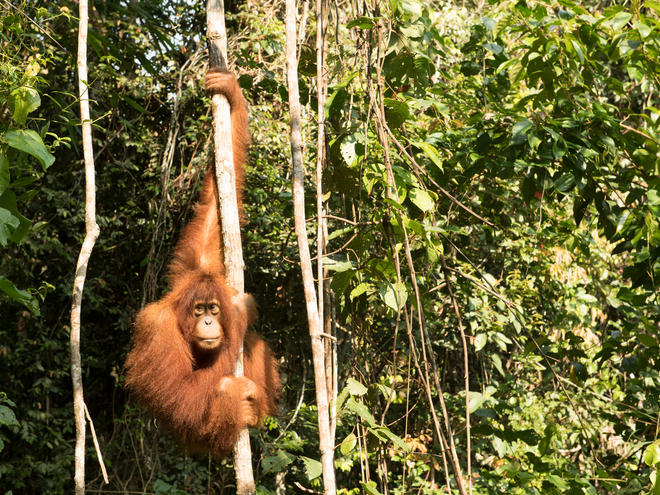
Outside of a zoo, where can you find rhinos, tigers, elephants and orangutans all in one place? The tropical rain forests of Borneo and Sumatra. Tropical forests are biodiversity wonderlands; you’ll find more different kinds of plants and animals in these types of forests than anywhere else on Earth. With year-round temperatures above 65 degrees Fahrenheit and plenty of water, just about any creature can thrive here.

2. Subtropical
Subtropical forests are like their tropical cousins, but not quite as hot or biodiverse. They are still warm, but with a noticeable chilly season; they are still chock full of a wide range of plants and animals, though none with a vulnerability to cold. As the borderland between tropical forests and the colder temperate forests, subtropical forests serve an important function as a winter home for migratory wildlife like monarch butterflies.

3. Temperate
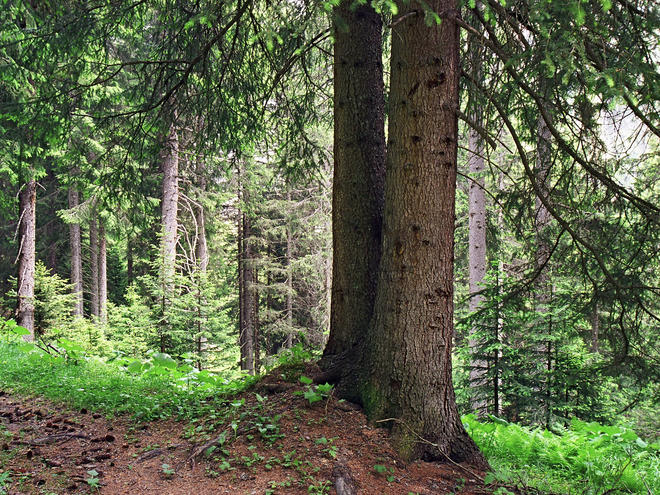
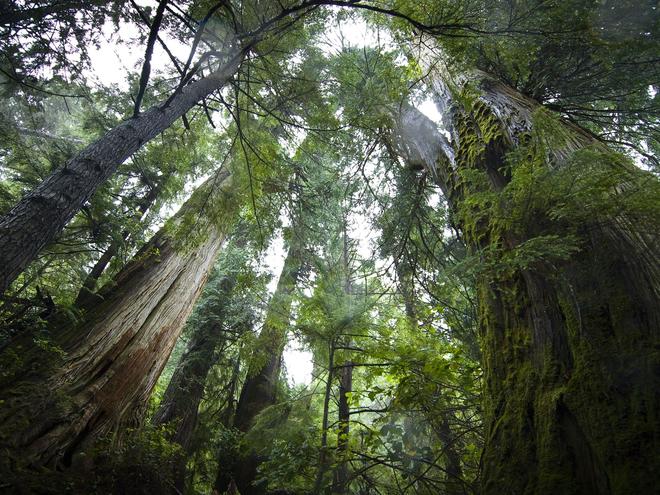
Temperate forests cycle through all four seasons. Most forests in the US are temperate forests. Depending on the region, you can find coniferous forests full of evergreen trees that have leaves year-round; deciduous forests with trees that shed their leaves every year; and some forests with a mix of everything. The cold winter means temperate forests don’t have the variety of animal and plant life you’ll find in subtropical or tropical regions, and many of the animals hibernate or migrate during the winter.

4. Boreal
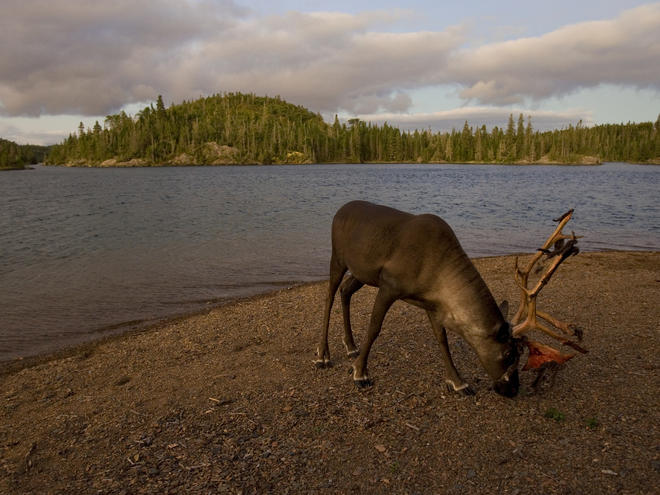
At the other extreme is the Boreal forest. Boreal forests are still full of life that’s adapted to withstand frigid temperatures year-round, such as caribou reindeer, or animals that can migrate long distances every winter. Full of deciduous trees and conifers, Boreal forests cover vast expanses in Canada, Alaska, and Russia. Boreal forests are also an important carbon sink. Like all forests they absorb carbon dioxide –a main contributor to global warming and climate change—removing it from the atmosphere and helping to keep the entire planet healthy.

While these forests are all different, there is one unfortunate unifying factor: they are all threatened. We’re losing 18.7 million acres of forests every year to deforestation and degradation, mainly in the tropics. That’s equivalent to 27 soccer fields a minute. The causes may be different—some are cleared for ranching and agriculture, while others are illegally harvested for timber—but the loss and forest degradation is equally devastating.

The good news is that World Wildlife Fund and our partner organizations around the world are not going to let this continue. We’re implementing innovative, permanent solutions to conserve forests around the world: encouraging companies to use wood products from forests that are responsibly managed, in accordance with the Forest Stewardship Council standards; working with governments to stop illegal logging; pooling our resources with other groups to protect huge sections of forests in the long-term; and much more. Together we’ll keep all forests, no matter which category they fall into, safe and healthy for generations to come.


Published March 21, 2019 at 05:00AM
Description

We own the copyright of all the content and articles on world-visits.blogspot.com. Any republish and editing of the articles for commercial use without our permission is strictly prohibited, although you can share the content any where on social network sites. Maximum images use in here not under our copyrights and belong to their respective owners. The images we collect from different free use sources. If you think any graphics or images is offensive or under your copyright and you no longer willing to show it in here than please email us at newblogfame@gmail.com. to get it removed.