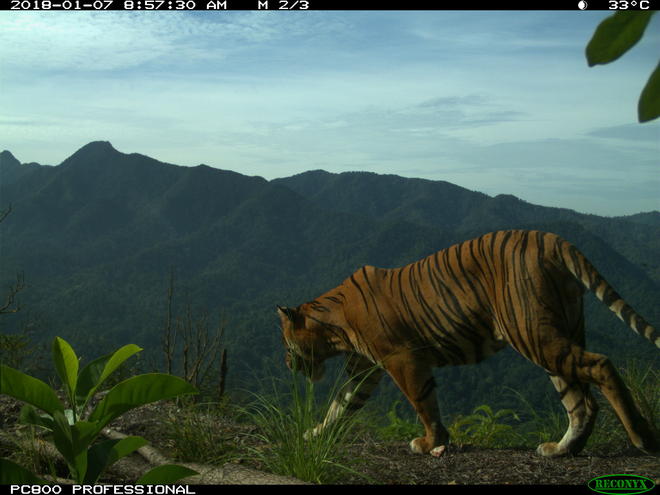
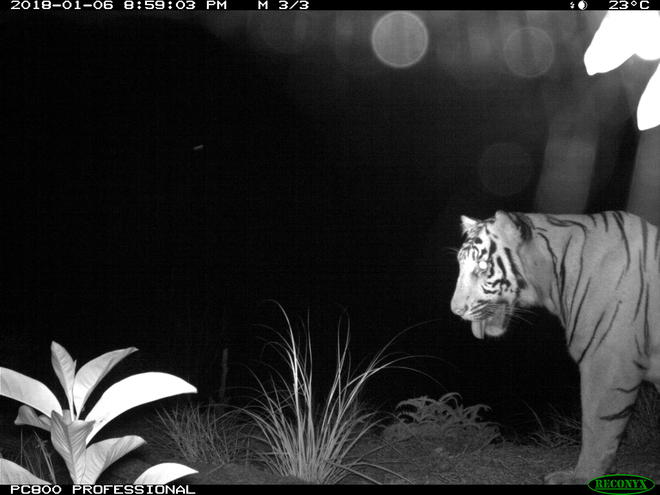
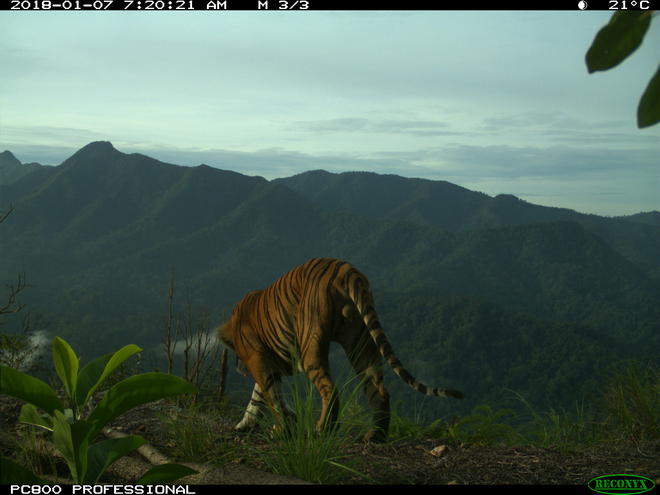
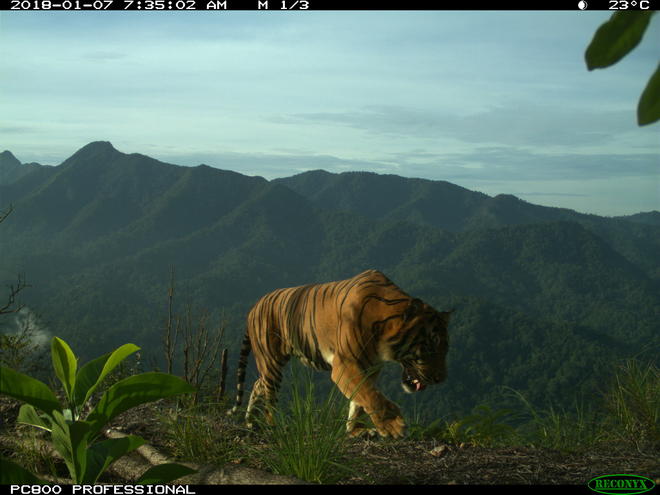
Sumatran tiger caught on camera

Sumatran tiger caught on camera

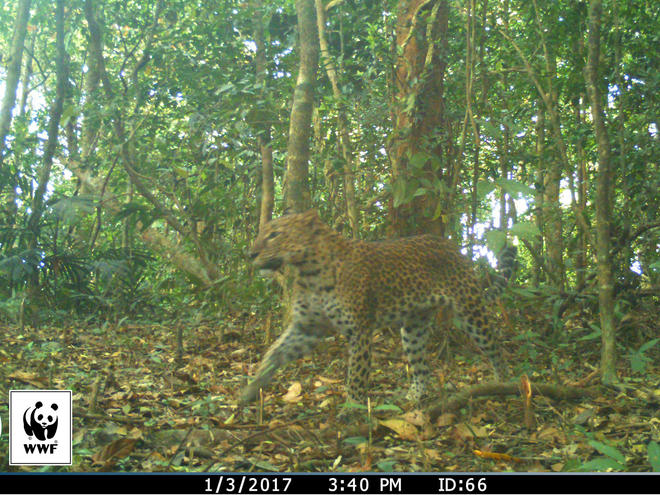
The camera traps are part of a collaboration between WWF and the Riau Forestry Department to help determine which species abound in the region. An important conservation tool, the cameras are equipped with infrared sensors that take a picture whenever they sense movement in the forest.  Around 18 cameras were strategically installed back in March of 2017 to support WWF’s intensive tiger monitoring in central Sumatra.

“This is the first time we have caught such a beautiful image of a tiger here. I feel our hard work has paid off just by seeing this majestic creature roaming on the island,” said Febri Anggriawan, WWF-Indonesia’s Tiger Research Coordinator leading this study.

The smallest in size of all wild tigers, the Sumatran tiger faces threats from rampant poaching and deforestation for palm oil and pulp and paper. Today, less than 400 of these tigers hold on for survival in the remaining patches of forests on the island of Sumatra. WWF works with the government of Indonesia and conservation partners to strengthen law enforcement and antipoaching efforts and slow deforestation in their remaining habitat.

SAVE TIGERS NOW

Help us reach our goal of 300 donors in honor of Global Tiger Day, July 29—donate to protect tigers today.


Published July 29, 2018 at 05:00AM

Caught on Camera: A Male Sumatran Tiger

Caught on Camera: A Male Sumatran Tiger

The camera traps are part of a collaboration between WWF and the Riau Forestry Department to help determine which species abound in the region. An important conservation tool, the cameras are equipped with infrared sensors that take a picture whenever they sense movement in the forest.  Around 18 cameras were strategically installed back in March of 2017 to support WWF’s intensive tiger monitoring in central Sumatra.

“This is the first time we have caught such a beautiful image of a tiger here. I feel our hard work has paid off just by seeing this majestic creature roaming on the island,” said Febri Anggriawan, WWF-Indonesia’s Tiger Research Coordinator leading this study.

The smallest in size of all wild tigers, the Sumatran tiger faces threats from rampant poaching and deforestation for palm oil and pulp and paper. Today, less than 400 of these tigers hold on for survival in the remaining patches of forests on the island of Sumatra. WWF works with the government of Indonesia and conservation partners to strengthen law enforcement and antipoaching efforts and slow deforestation in their remaining habitat.

SAVE TIGERS NOW

Help us reach our goal of 300 donors in honor of Global Tiger Day, July 29—donate to protect tigers today.


Published July 29, 2018 at 05:00AM

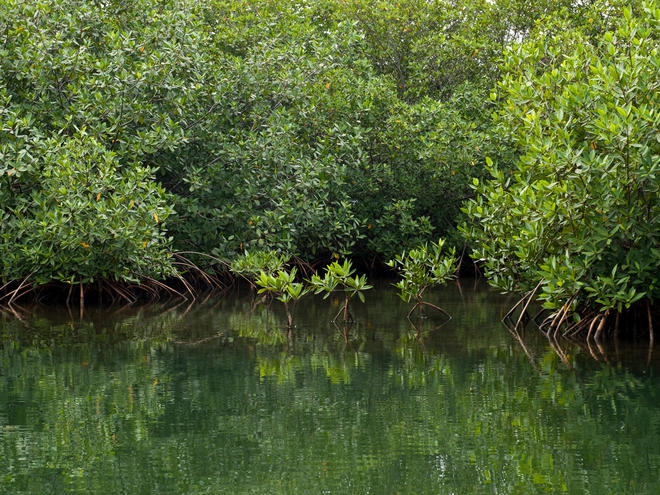
Mangroves mean life for coastal communities throughout the tropics

Mangroves mean life for coastal communities throughout the tropics

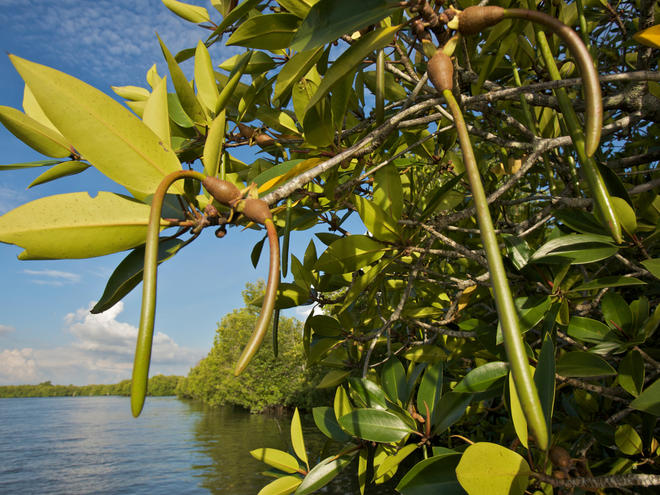
Most trees could never survive salty ocean water. But mangroves aren’t just any trees. These species, found in tropical and subtropical regions, serve as a transition between marine to terrestrial environments. While mangroves provide valuable services for people and the planet, they’re disappearing at an alarming rate and human activity is mostly to blame.

Explore these forests below and learn what WWF is doing to bring back 20% of the mangroves we’ve lost by 2030.

Critical habitat
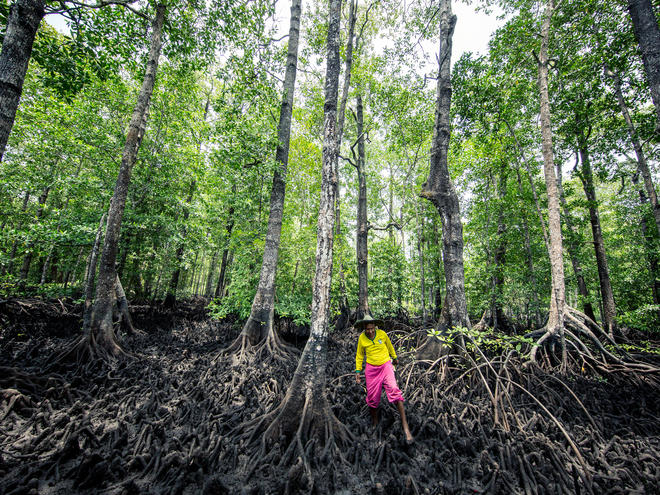
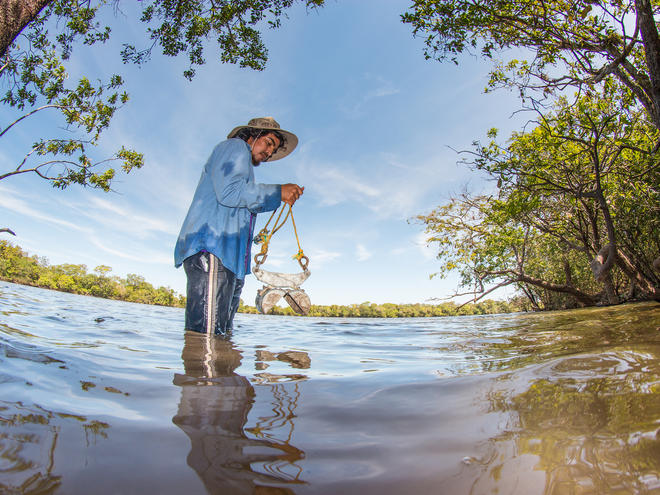
Mangrove forests are critical habitats that provide food and financial security for millions. This man is one of many locals who search for mud crabs in the mangroves around their homes as part of a fishing cooperative in Kei Kecil, Indonesia. Mangroves also offer critical protection for these communities by weakening wave energy and storm surges, adapting to rising sea levels, and stabilizing shorelines from erosion.


Storing carbon
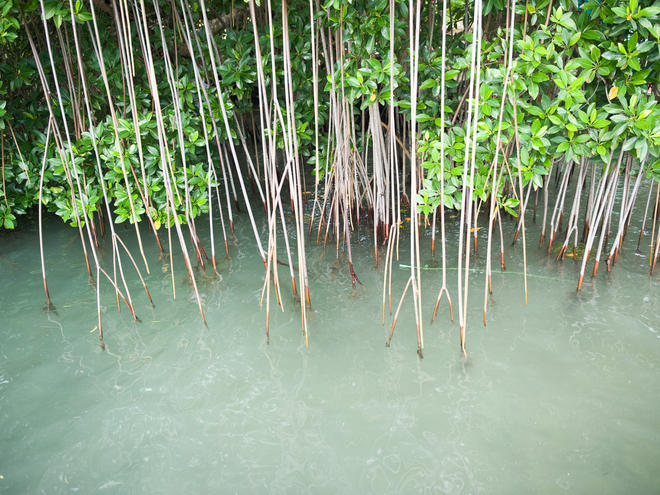
Carbon pollution from factories, cars, and other sources is impacting the global climate. Mangroves, like these found in Placencia, Belize in Central America, capture and store tremendous amounts of carbon. Destroying these trees fuels climate change at a time when governments and industry have committed to reduce emissions.


Restoration
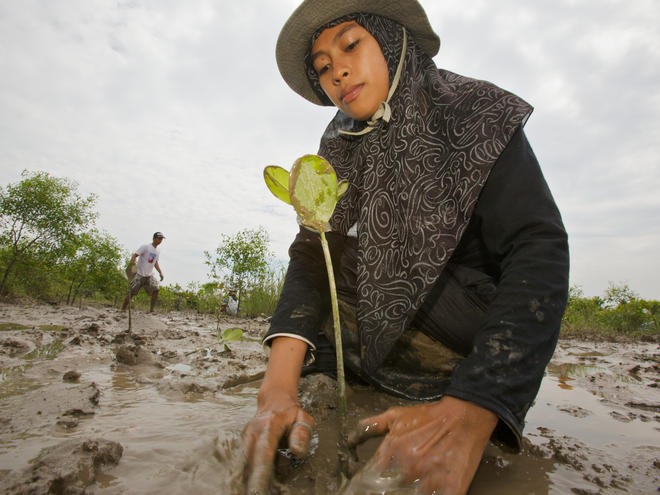
Mangrove restoration efforts can help reverse declines of these valuable trees. That was the goal of this seedling planting in abandoned shrimp ponds near Jaring Halus Village, North Sumatra.


Facing destruction
Roughly 50% of the world’s mangroves have been wiped out in the last half century and human activity has been a driver of damage. If we don’t act now, we could lose the remaining mangrove cover in just 100 years.


A damaged forest
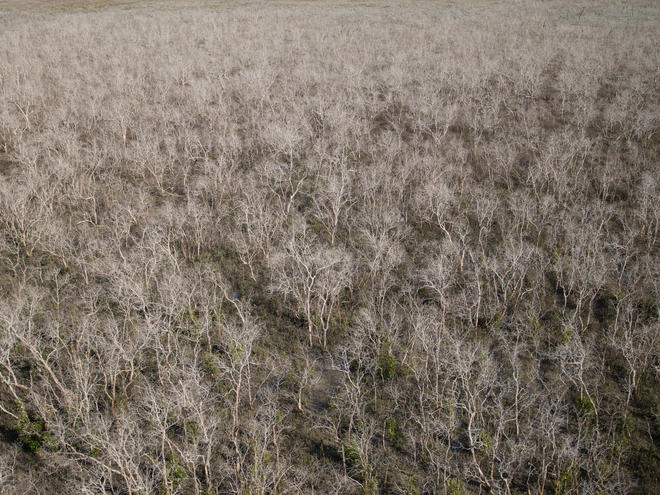
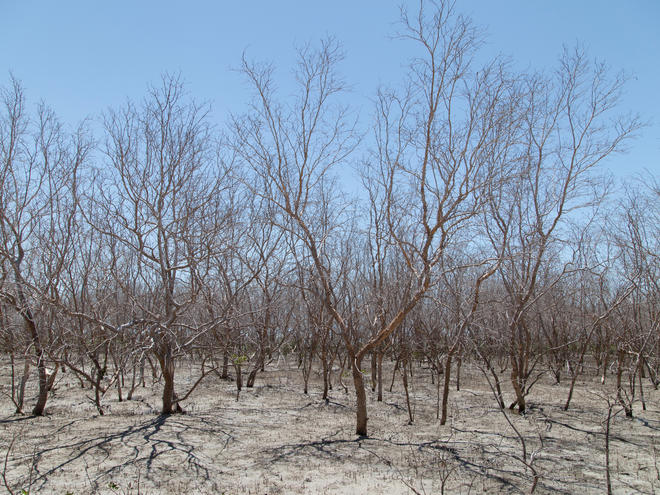
Scientists are still studying a mangrove dieback in the Northern Territory near the Gulf of Carpentaria in Australia. Experts say there’s reason to believe climate change played a role.


A healthy forest
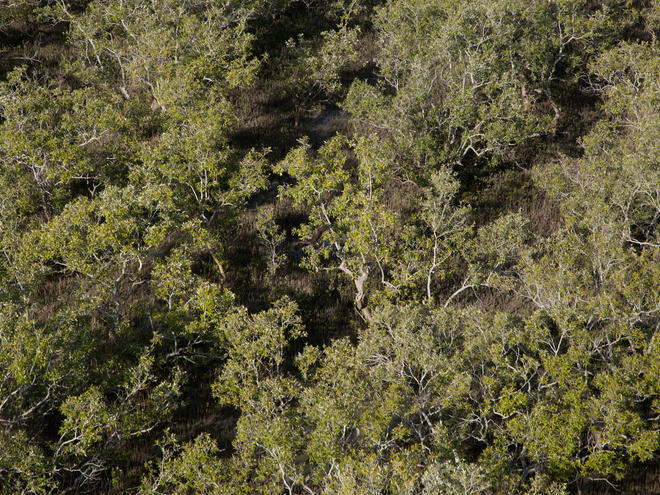
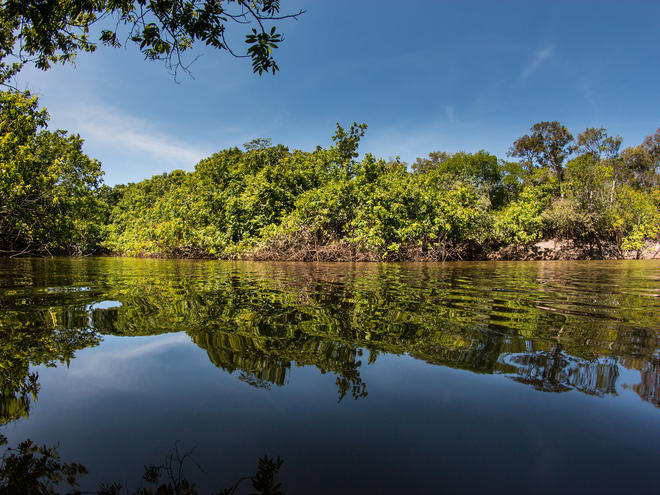
This is what a healthy mangrove forest looks like. These trees are near the mangrove dieback in the Northern Territory near the Gulf of Carpentaria in Australia.


How we can help mangroves
There is important mangrove conservation work underway right now, but it is not being done at a scale that can overcome the continued annual rate of destruction. That’s why WWF is collaborating in the Global Mangrove Alliance to support projects that reverse the ongoing loss of critically important mangroves through policy reform, new technologies, improved land use management, and investment in on-the-ground conservation, restoration, and sustainable use of mangroves.

Learn more about the Global Mangrove Alliance.


Published July 25, 2018 at 05:00AM

Colombia’s free-flowing Bita River gains international protection

Colombia’s free-flowing Bita River gains international protection

In a major triumph for freshwater conservation, Colombia’s Bita River basin was recently announced by President Juan Manuel Santos as a Wetland of International Importance under the Ramsar Convention—an intergovernmental treaty that that provides the framework for the conservation and sustainable use of wetlands. This decree spans 824,500 hectares, establishing the river basin as the largest of the country’s 11 Ramsar sites and one of very few protected sites in the world to encompass an entire free-flowing river watershed.

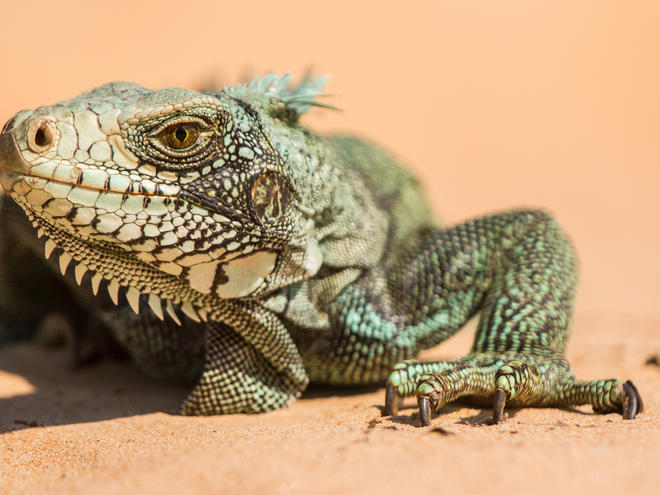
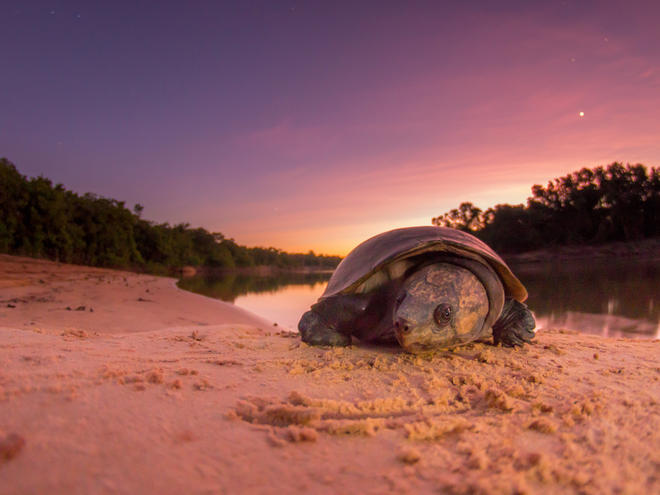
Running unimpeded for more than 372 miles before flowing into the Orinoco River, the Bita River is a treasure trove of biodiversity. It harbors at least 1,474 species of plants, 254 fish species, 201 bird species, and 63 species of mammals—from tapirs to deer and jaguars—and its extensive freshwater habitats and gallery forest ecosystems are home to iconic species such as river dolphins, the blue arowana, and the charapa turtle.

It also supports local communities who rely on the river for everything from fishing to tourism to survive. 

The historic protection of the river is the result of joint efforts by WWF-Colombia and the Alliance for the Bita, comprised of the Omacha Foundation, the von Humboldt Institute, Vichada Provincial Government, the Ministry of the Environment and Sustainable Development, and other partners. The Alliance has been working with citizens and the government in recent years to define a sustainable future for the Bita River. After years of studies and consultations, stakeholders agreed to give the river a protected status that would allow for sustainable use, ensuring that the river’s incredible biodiversity—and the important ecological processes on which its survival hinges—are safeguarded in the long term. 

“The designation means that a vast wealth of species along the Bita River will be protected with support from local inhabitants and institutions,” said WWF-Colombia freshwater specialist Saulo Usma. “Critical wetland complexes, such as floodable savannah, drainage channels, and miriti palm ecosystems—which are home to a wide variety of fish—will be conserved. These are a vital source of income for local inhabitants.”

Wild and free

Securing the Bita River is not only critical for protecting its biodiversity. As a free-flowing river—a river that’s largely unaffected by human-made changes to its flow and connectivity—it’s a rare example of a watershed that’s been minimally affected by deforestation and human development.

Around the globe, rivers are under assault from pollution, floods, droughts, dams, and more. Today, an estimated 60,000 large dams (dams that can generate one megawatt of power or more) have been erected on more than half of the planet's major rivers. Because of these threats, our rivers are losing life rapidly; since 1970, freshwater species populations have declined by 81%—twice as fast as the decline of marine or terrestrial species.

Remarkably, more than 95% of the Bita River’s watershed is still intact. And thanks to the commitments of the Colombian government and its partners to safeguard the country’s rivers and freshwater resources, it’s likely to remain that way.

“The Bita River’s ecological health has set the standard that other Colombian rivers should aim for,” said Director of WWF-Colombia Mary Lou Higgins. “This is a big step for the protection of the Bita River and for the concepts of conservation and sustainable development in the Orinoco region.”

Learn more about free-flowing rivers and how WWF is working to protect them.


Published July 18, 2018 at 05:00AM

New camera trap photos in Thailand reveal a wildlife haven

New camera trap photos in Thailand reveal a wildlife haven

The leopard doesn’t seem to notice. Neither does the family of elephants, nor the grazing tapir. But in the dense forests of Kui Buri National Park, located in Thailand’s Tenasserim Hills, a hidden camera trap is busy snapping photos of each animal that passes by.

Camera traps are just like regular cameras, except they’re triggered by infrared sensors to take photos or videos whenever they sense movement. In recent years, researchers at WWF-Thailand have been using these specially adapted devices throughout Kui Buri to capture images of various species on film, which helps them to determine which animals—and how many—are present in the region. They also allow scientists to track and monitor wildlife movement.

Kui Buri National Park is one of 21 national parks and wildlife sanctuaries that make up the important Dawna Tenasserim Landscape that straddles the border of Thailand and Myanmar. Covering more than 5.6 million acres, the Landscape is one of the largest protected area complexes in southeast Asia and provides vital habitat for an astounding array of wildlife, including sun bears, tigers, and Asian elephants.

Since 2005, the Kui Buri Wildlife Conservation Program has been working to protect wild elephants and other wildlife in the park. A collaboration between WWF-Thailand and the Department of National Parks, the project supports critical habitat restoration, anti-poaching patrols, and robust wildlife monitoring efforts to protect local elephant populations, in addition to preventing and mitigating human-wildlife conflict.

Human-elephant conflict was once a regular occurrence around the park, which is surrounded by farmlands to the south and east. Elephants would often venture into local pineapple fields in search of a snack, which led to significant losses for farmers and danger for elephants that faced retaliation. Today, WWF and park staff engage local farmers and communities to encourage sustainable land use planning, stop human encroachment into elephant habitats, and work together to reduce human-elephant conflict.

Thanks to their efforts, elephant deaths have declined dramatically since 2010. Elephant habitat and prey for tigers have also improved drastically in key regions, bolstering wildlife populations.

Learn more learn about how WWF is using camera traps for conservation:


Published July 11, 2018 at 05:00AM

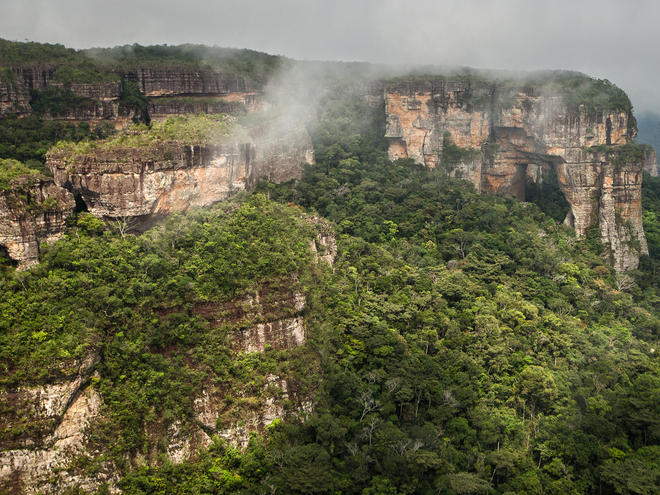
Colombia’s Serranía de Chiribiquete is now the world’s largest tropical rainforest national park

Colombia’s Serranía de Chiribiquete is now the world’s largest tropical rainforest national park

In a momentous win for conservation, Colombia’s Serranía de Chiribiquete was officially expanded to 4.3 million hectares today, making it the world’s largest protected tropical rainforest national park. It was also declared as a UNESCO World Heritage site in recognition of its “outstanding universal value” for nature and people.

Colombian President Juan Manuel Santos first announced the expansion of the park by 1.5 million hectares in February, marking the culmination of decades of joint conservation efforts by environmental organizations, including WWF, and the Colombian government.

“This is a defining moment for the protection of key ecosystems in Colombia,” said Mary Lou Higgins, Director of WWF-Colombia. “This is also a very important milestone for the Amazon and for forest conservation globally. The expansion and recognition of this unique place as a World Heritage site is a significant step toward safeguarding it for future generations.”

Located in the heart of the Colombian Amazon, Serranía de Chiribiquete park is a vibrant, biodiverse hotspot that has one of the highest rates of plant diversity in the northern Amazon and is home to thousands of species—many of which are threatened—including lowland tapirs, giant otters, giant anteaters, woolly monkeys, jaguars, and the Chiribiquete emerald hummingbird, the only endemic species in the Colombian Amazon.

In addition to its unique biodiversity, the protected area is culturally significant for indigenous communities and contains one of the oldest, largest, and densest archaeological pictographic complexes in the Americas. Fifty murals made up of more than 70,000 ancient paintings depicting animals, hunting, battle, and dancing—some more than 20,000 years old—can be found across the region’s many tepuis, table-top rock formations that rise out of the dense forest.

The park has been a protected area since 1989 and is the ninth World Heritage listing in Colombia, the second-most biodiverse country in the world after Brazil. Chiribiquete’s new designation will help strengthen protections around the park, providing critical buffers against deforestation throughout the Amazon’s essential wildlife corridors.

Protecting Chiribiquete’s future 

In recent years, climate change and deforestation from expanding agricultural production, land speculation, and illegal timber extraction—driven especially by political unrest—have been ever-present threats to Colombia’s forests. Sixty-six percent of the country’s deforestation now occurs in the Amazon—one of 11 regions in the world facing the highest risk of deforestation.

WWF experts estimate that if current deforestation trends continue, more than a quarter of the Amazon forest will be lost by 2030.

To prevent further destruction and to secure the natural resources within Colombia’s vital network of protected areas in the coming years, the Government of Colombia is working to manage Chiribiquete under an initiative called Heritage Colombia. Supported by WWF, the Gordon and Betty Moore Foundation, the Protected Areas and Biodiversity Fund, the Wildlife Conservation Society (WCS), Conservation International, and with initial funding from the German government, Heritage Colombia is a Project Finance for Permanence (PFP) initiative that uses an innovative funding mechanism to increase the amount of land in Colombia’s protected areas while ensuring the land is properly governed.

“I like to think of Heritage Colombia as ‘parks for peace and peace for parks,” said Higgins. “Not only will better management and governance of the parks help bring peace to the country, but peace in the country will also help ensure that our parks are healthy for generations to come.”


Published July 02, 2018 at 05:00AM

Climate change puts the Pacific Walrus population on thin ice
Climate change puts the Pacific Walrus population on thin ice

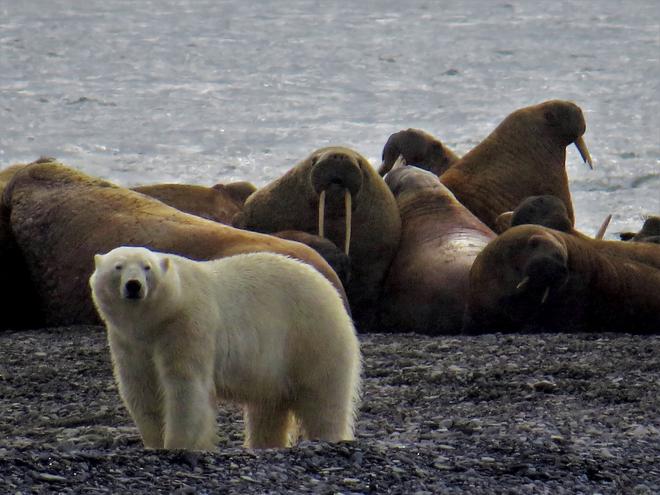
Every autumn for about the last decade, the residents of Enurmino—a tiny, Russian village located along the Chukchi Sea—have witnessed a strange sight. Tens of thousands of Pacific walruses have exited the chilly ocean waters and assembled en masse along the shoreline.

This phenomenon, known as a “haulout,” occurs when large hordes of mostly females and calves pull themselves onto the beach to rest. The walruses climb on to shore because of declining sea ice cover.

“Typically, walruses spend most of their time at sea hauled out on ice floes as they forage for food on the ocean floor” explains WWF’s Nikhil Advani, “but as sea ice declines, they’re increasingly hauling out on land instead.”

Throughout the Arctic, sea ice is forming later in the season and disappearing earlier, limiting the amount of space available for walruses to congregate. Floating summer sea ice is also receding further north to where the water is too deep for the animals to dive and feed. This forces them to desert the ice and seek refuge ashore. Once on land, the walruses must travel much longer distances—up to 250 miles round trip—to reach their food supply.

Researchers first observed large haulouts off Alaska’s Point Lay in 2007, when summer Arctic sea ice reached its second-lowest minimum extent in recorded history. As the extent of summer sea ice has continued to decline in Arctic waters, the number of walruses coming ashore has grown considerably.

In 2014, around 35,000 walruses hauled out along a small stretch of beach in Point Lay. 

These massive haulouts can be incredibly dangerous for walruses. The crowded animals are easily spooked; any sound or scent—an airplane flying by, a human, or a whiff of a predator—can cause a deadly stampede. In their rush to the ocean, the heavy walruses—which can weigh up to 1.5 tons—can trample other walruses, especially young calves, which are susceptible to injuries and death. Last year, disturbances to a haulout near Cape Schmidt, Russia caused more than 500 deaths.

In addition to posing risks for individual animals, these mass aggregations are a troubling sign that Pacific walruses and other species are under serious threat from climate change-driven habitat loss. “Some projections suggest that the Arctic could be ice-free in the summers as early as 2040,” says Advani. “That means sea ice-dependent species like walruses and polar bears will be spending more time on land, which could decrease access to their prey base and increase human-wildlife conflict.”

Pacific walrus numbers reached record-low numbers in the early 1960s, but rebounded by the 1980s following significant conservation efforts. Unfortunately, the Pacific walrus population is once again in decline—with just 129,000 animals left.

In coastal Russia, WWF is actively working with local communities to protect migrating walruses—which are economically and culturally significant for native populations—to help the species adapt to its rapidly changing habitat. In particular, WWF engages residents to establish strict no-fly zones and limit access to haulout areas, reducing the risk of harmful disturbances.

With support from WWF’s Wildlife Adaptation Innovation Fund, researchers are also collaborating with the residents of Enurmino to create artificial feeding spots along polar bear routes. Since 2017, we’ve worked with local villagers to relocate walruses that have died of natural causes from the beach to known polar bear feeding areas along the Chukotka coast, which helps to keep polar bears and other predators away from the walrus nesting grounds.

Research suggests that because of these interventions, there’s been a significant decline in polar bear disturbances to haulouts and human-polar bear conflict near Enurmino. That success has inspired residents in Ryrkaypiy and Vankarem—two other villages located near haulout areas—to undertake similar projects next year.

Still, the future remains tenuous for the Pacific walrus and countless other Arctic species. If urgent action isn’t taken to limit the worst impacts of climate change, the loss of sea ice will put increasing strain on vulnerable populations.


Published June 28, 2018 at 05:00AM
Description

We own the copyright of all the content and articles on world-visits.blogspot.com. Any republish and editing of the articles for commercial use without our permission is strictly prohibited, although you can share the content any where on social network sites. Maximum images use in here not under our copyrights and belong to their respective owners. The images we collect from different free use sources. If you think any graphics or images is offensive or under your copyright and you no longer willing to show it in here than please email us at newblogfame@gmail.com. to get it removed.