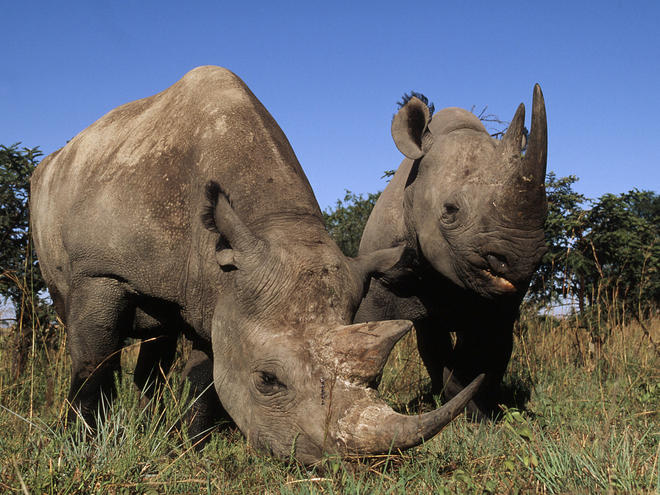
South Africa’s rhino poaching trends show a slight decrease—but death toll remains too high

South Africa’s rhino poaching trends show a slight decrease—but death toll remains too high

New rhino poaching numbers out of South Africa show a small decrease from the previous year, but the death toll remains perilously high.

The South African Department of Environmental Affairs announced that poachers killed 1,038 rhinos in 2017, down from 1,054 in 2016. Officials recorded a record loss of 1,215 rhinos in 2014.

Much of the poaching has shifted to rhino populations living outside of South Africa’s Kruger National Park to places where the risk of getting caught is lower and the benefits are greater.

Unfortunately, we’re seeing an increase in poaching numbers for other species in Kruger. Elephant losses grew to 67 in 2017 from 46 in 2016.

“Wildlife trafficking remains a pervasive threat to rhinos, and increasingly to other species such as elephants and lions which bring tourists and jobs to our important protected areas,” said Dr. Jo Shaw, African rhino lead for WWF International. “These crimes also affect people living around our parks by exposing them to criminals connected to international trafficking syndicates.”

Despite the still dangerously high rhino poaching numbers, the South African government has made some progress in tackling the issue. It has increased the number of convictions for illegal activities relating to rhinos, especially higher up within the criminal syndicates behind the poaching. And it’s working closely with communities to get them involved in the legal wildlife economy, including ecotourism.

WWF is supporting and experimenting with community-based approaches to addressing wildlife trafficking and building relationships between key protected areas and people who live among or close to Africa’s wildlife. We’re also providing equipment and scientific support for rhino protection and safely moving rhinos to more secure areas where their numbers can grow.

You can help rhinos. Pledge to stop wildlife crime and commit to preserving nature's beauty for future generations.


Published January 29, 2018 at 06:00AM
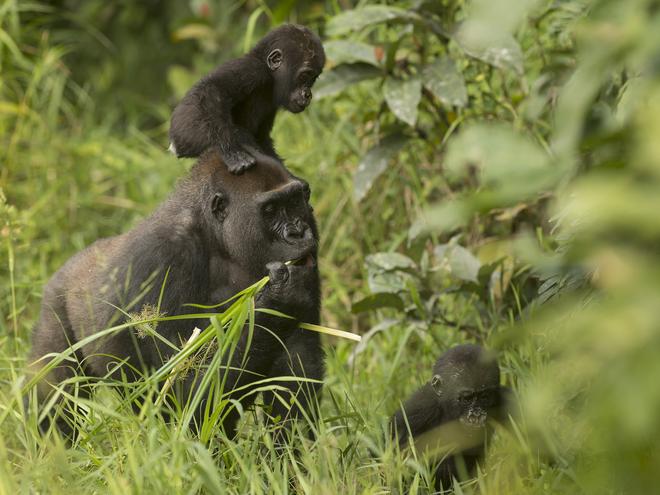
Gorilla twins of Dzanga-Sangha turn 2 years old

Gorilla twins of Dzanga-Sangha turn 2 years old

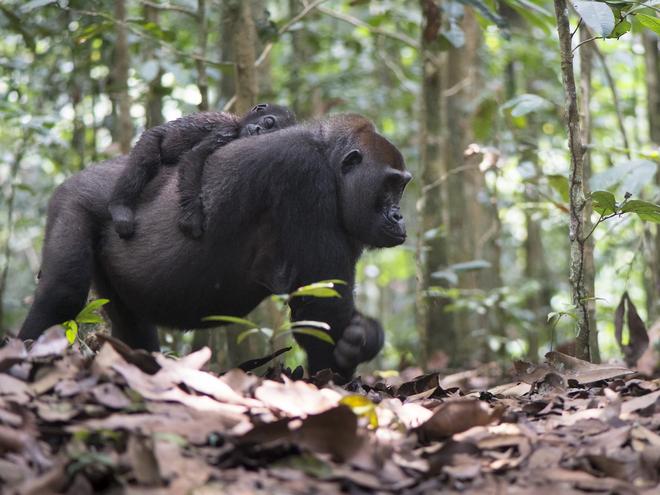
Inganda and Inguka are, in many ways, typical two-year olds. Inganda sticks close to his mother, often riding on her back. While Inguka is a bit more independent and loves to climb.

Despite these ordinary behaviors, these siblings are quite extraordinary: Inganda and Inguka are the first twins born to habituated western gorillas in the Dzanga-Sangha Protected Areas complex in the Central African Republic (CAR).

As the twins mark their second birthday, conservationists are celebrating. “I have observed many infant gorillas grow and develop from birth into sub-adults,” says Terence Fuh Neba, a primate conservationist working for WWF-CAR, “But observing the twins is a heartening and an extraordinary experience for me.”

Western lowland gorillas like Inganda and Inguka are Critically Endangered. They face serious threats from poaching, disease and habitat loss across Central Africa.

To protect these gorillas and their forests, WWF and the government of the CAR launched the Primate Habituation Program in the Dzanga-Sangha Protected Areas in 1997. Together, we work habituate gorillas for tourism and research.

Habituating great apes to human presence is important for conservation as it not only increases scientific knowledge and understanding of the species, it can also generate funding for conservation activities and revenue for local economies, strengthening the link between conservation and communities.

To date, the program has successfully habituated three western lowland gorilla groups while two additional groups are presently undergoing habituation. The program is also a major source of employment for local people. This includes indigenous Ba’Aka people hired as trackers and Bantu people working as guides. Today, the Primate Habituation Program is considered one of the most successful Western Lowland Gorilla tourism and research programs in Central Africa.

Meanwhile, Iganda and Inguku continue to explore the world around them. Inganda seems to be his morther Malui’s preferred twin—or maybe just the weaker one-- and spends most of his time riding on her back. Inguka, on the other hand, has gained his position within the group, staying close to the silverback and interacting with other group members. Inguka is most often on the ground and can climb to nearly 100 feet without assistance. The twins’ older siblings have played a great role in raising Inguka, making the job easier for Malui.

“Every day with the gorillas is special,” says Terence. Though Western gorilla populations are declining, the mountain gorillas’ story offers hope for the species and its forest home.  


Published January 25, 2018 at 06:00AM

Gorilla twins of Dzanga-Sangha mark their 2nd birthday

Gorilla twins of Dzanga-Sangha mark their 2nd birthday

Inganda and Inguka are, in many ways, typical two-year olds. Inganda sticks close to his mother, often riding on her back. While Inguka is a bit more independent and loves to climb.

Despite these ordinary behaviors, these siblings are quite extraordinary: Inganda and Inguka are the first twins born to habituated western gorillas in the Dzanga-Sangha Protected Areas complex in the Central African Republic (CAR).

As the twins mark their second birthday, conservationists are celebrating. “I have observed many infant gorillas grow and develop from birth into sub-adults,” says Terence Fuh Neba, a primate conservationist working for WWF-CAR, “But observing the twins is a heartening and an extraordinary experience for me.”

Western lowland gorillas like Inganda and Inguka are Critically Endangered. They face serious threats from poaching, disease and habitat loss across Central Africa.

To protect these gorillas and their forests, WWF and the government of the CAR launched the Primate Habituation Program in the Dzanga-Sangha Protected Areas in 1997. Together, we work habituate gorillas for tourism and research.

Habituating great apes to human presence is important for conservation as it not only increases scientific knowledge and understanding of the species, it can also generate funding for conservation activities and revenue for local economies, strengthening the link between conservation and communities.

To date, the program has successfully habituated three western lowland gorilla groups while two additional groups are presently undergoing habituation. The program is also a major source of employment for local people. This includes indigenous Ba’Aka people hired as trackers and Bantu people working as guides. Today, the Primate Habituation Program is considered one of the most successful Western Lowland Gorilla tourism and research programs in Central Africa.

Meanwhile, Iganda and Inguku continue to explore the world around them. Inganda seems to be his morther Malui’s preferred twin—or maybe just the weaker one-- and spends most of his time riding on her back. Inguka, on the other hand, has gained his position within the group, staying close to the silverback and interacting with other group members. Inguka is most often on the ground and can climb to nearly 100 feet without assistance. The twins’ older siblings have played a great role in raising Inguka, making the job easier for Malui.

“Every day with the gorillas is special,” says Terence. Though Western gorilla populations are declining, the mountain gorillas’ story offers hope for the species and its forest home.  


Published January 25, 2018 at 06:00AM

Gorilla twins celebrate 2nd birthday

Gorilla twins celebrate 2nd birthday

Inganda and Inguka are, in many ways, typical two-year olds. Inganda sticks close to his mother, often riding on her back. While Inguka is a bit more independent and loves to climb.

Despite these ordinary behaviors, these siblings are quite extraordinary: Inganda and Inguka are the first twins born to habituated western gorillas in the Dzanga-Sangha Protected Areas complex in the Central African Republic (CAR).

As the twins mark their second birthday, conservationists are celebrating. “I have observed many infant gorillas grow and develop from birth into sub-adults,” says Terence Fuh Neba, a primate conservationist working for WWF-CAR, “But observing the twins is a heartening and an extraordinary experience for me.”

Western lowland gorillas like Inganda and Inguka are Critically Endangered. They face serious threats from poaching, disease and habitat loss across Central Africa.

To protect these gorillas and their forests, WWF and the government of the CAR launched the Primate Habituation Program in the Dzanga-Sangha Protected Areas in 1997. Together, we work habituate gorillas for tourism and research.

Habituating great apes to human presence is important for conservation as it not only increases scientific knowledge and understanding of the species, it can also generate funding for conservation activities and revenue for local economies, strengthening the link between conservation and communities.

To date, the program has successfully habituated three western lowland gorilla groups while two additional groups are presently undergoing habituation. The program is also a major source of employment for local people. This includes indigenous Ba’Aka people hired as trackers and Bantu people working as guides. Today, the Primate Habituation Program is considered one of the most successful Western Lowland Gorilla tourism and research programs in Central Africa.

Meanwhile, Iganda and Inguku continue to explore the world around them. Inganda seems to be his morther Malui’s preferred twin—or maybe just the weaker one-- and spends most of his time riding on her back. Inguka, on the other hand, has gained his position within the group, staying close to the silverback and interacting with other group members. Inguka is most often on the ground and can climb to nearly 100 feet without assistance. The twins’ older siblings have played a great role in raising Inguka, making the job easier for Malui.

“Every day with the gorillas is special,” says Terence. Though Western gorilla populations are declining, the mountain gorillas’ story offers hope for the species and its forest home.  


Published January 25, 2018 at 06:00AM

Nepal introduces a climate-smart plan to protect snow leopards

Nepal introduces a climate-smart plan to protect snow leopards

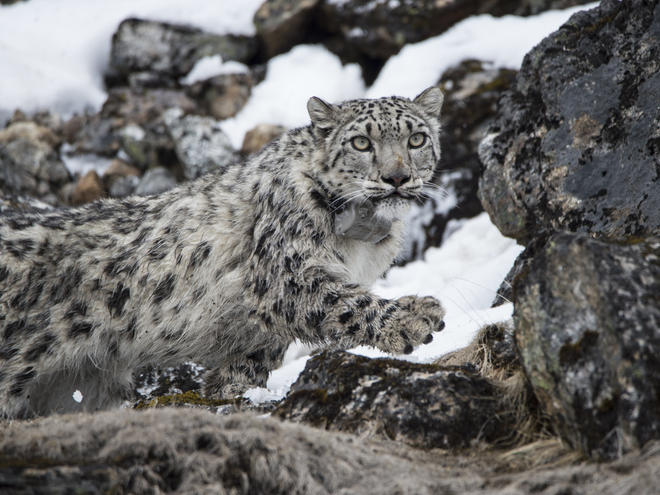
In August 2017, Nepal made conservation history by becoming the first country to launch its climate-smart snow leopard landscape management leading the way in safeguarding the species and its habitat.

Nepal’s conservation plan, made under a joint initiative that aims to conserve snow leopards and valuable high mountain habitat called the Global Snow Leopard and Ecosystem Protection Program (GSLEP), addresses key current and emerging threats to snow leopards, including climate change, and is seen as a model for other range countries to adopt.

 “This is the first climate-smart landscape management plan for snow leopard conservation in the world and is evidence of the Government of Nepal’s high level of commitment to this goal,” said Prakash Mathema, secretary at Nepal’s Ministry of Forests and Soil Conservation. “It could not have been possible without the support of local communities, conservation organizations and other committed partners.”

The plan addresses even the toughest challenges including tackling the complex impacts of climate change, and Nepal has once again established itself as a leader in conservation, showing much-needed ambition despite facing some of the toughest environmental, economic and political conditions.

With the plan, Nepal has set a strong precedent and paved the way to achieve the ambitious GSLEP goal set by all 12 snow leopard range countries— to secure 20 snow leopard landscapes by 2020.

In doing so, these nations are not only safeguarding the future of the snow leopard, but also its habitat, the headwaters for rivers on which hundreds of millions directly depend as a source of freshwater.

The development of the snow leopard landscape management plan of Nepal was supported by the WWF Conservation and Adaptation in Asia’s High Mountain Landscapes and Communities (AHM) project, funded by USAID. The AHM project has also supported snow leopard research, watershed management, and livelihoods programs in snow leopard territory to safeguard the cat’s future in this Himalayan nation.


Published January 22, 2018 at 06:00AM

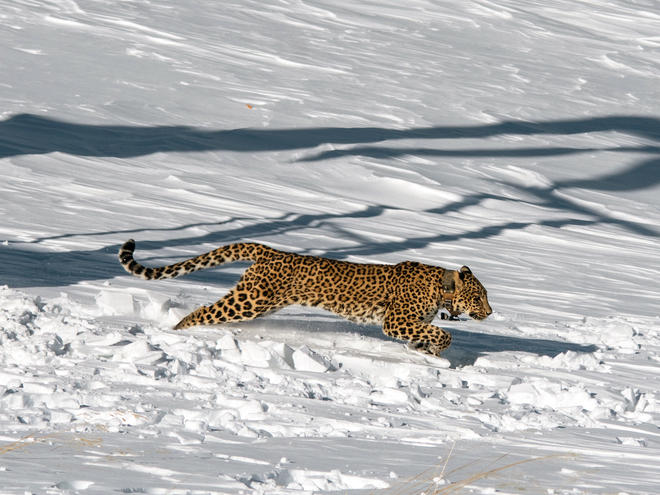
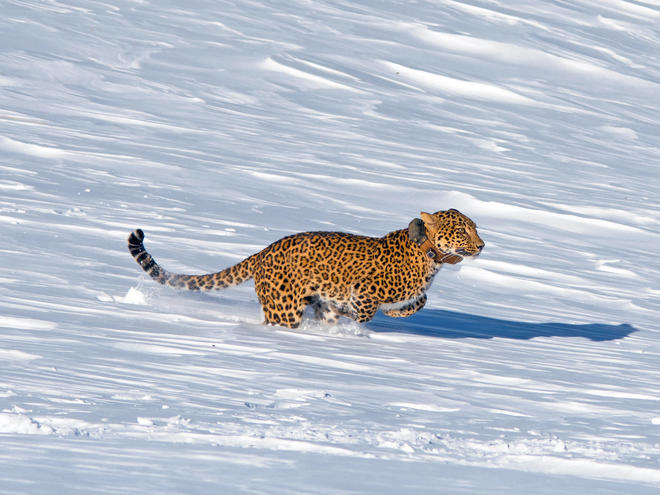
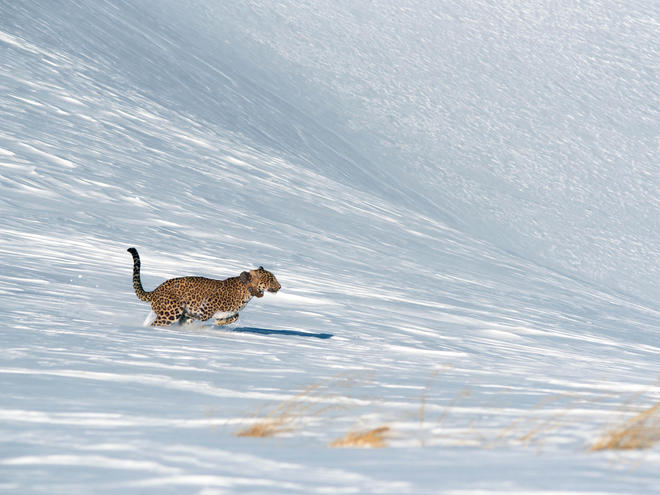
A Persian leopard makes her debut into the wild—for the second time

A Persian leopard makes her debut into the wild—for the second time

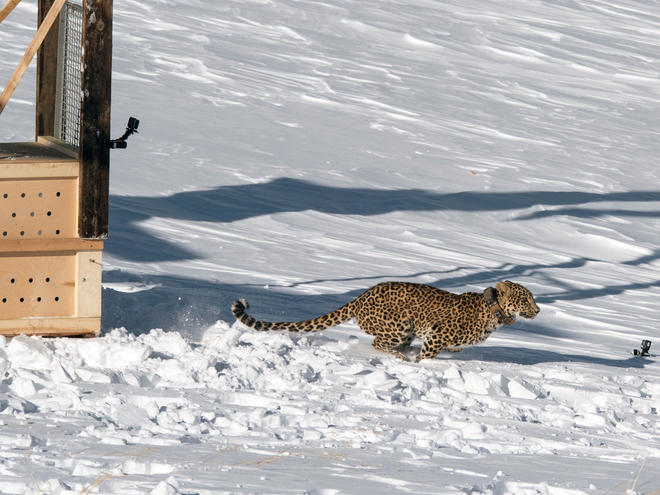
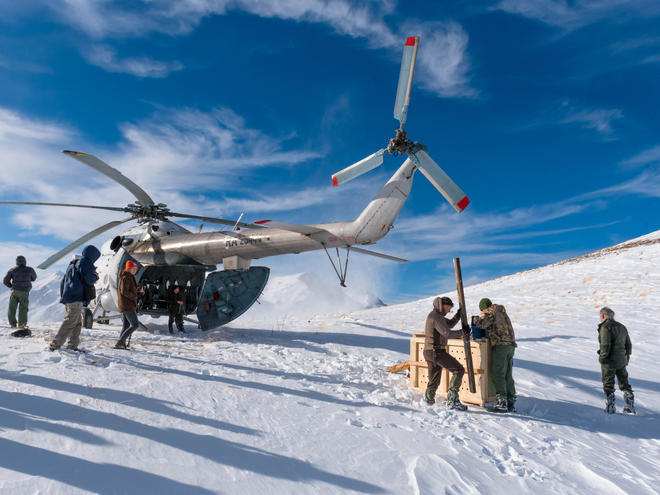
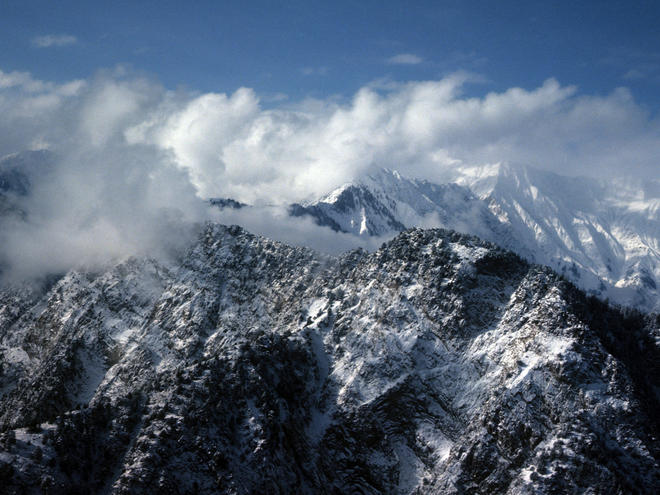
Meet Victoria. She was among three Persian leopards released in 2016 into the wild of the Caucasus Nature Reserve—a place where the species had gone extinct. Last June, she went off the grid, only to reappear six months later in November in the village of Lykhny. Residents found traces of a leopard entering the community at night, so local authorities notified the Ministry of Natural Resources and the Environment of Russia about the animal’s approximate location.

The specialists who came to safely capture and examine the leopard quickly realized it was Victoria. They brought her to the leopard reintroduction center in Sochi. After examinations showed she was in great health, experts decided to re-release her with a new GPS collar.

Take a look at Victoria bounding back out into the wild!


Published January 19, 2018 at 06:00AM

New weather stations support climate and water research in Bhutan

New weather stations support climate and water research in Bhutan

Researchers have set up four weather stations in a preserve in the mountains of north Bhutan for the first time, allowing them to monitor conditions at various altitudes over the long-term. Data collected by these stations will help determine the best ways to help wildlife in the region adapt to climate change.

The Ugyen Wangchuk Institute for Conservation and Environmental Research (UWICER) set up these hydro-meterological (hydromet) stations at elevations between 9,100 feet and 13,400 feet along a slope in the institute’s research preserve to monitor weather data, and help gauge long-term climate trends. These weather stations, set up with support from WWF’s Conservation and Adaptation in Asia’s High Mountains (AHM) project and funded by USAID, are part of an integrated, climate-smart approach to conservation and adaptation in the region.

The hydro-meteorological data collected—such as daily precipitation, temperature, and the volume of water moving down a river or stream during a given period—will fill a gap in climate information at the edge of snow leopard range in Bhutan, and complement ongoing studies at the institute. The institute currently assesses animal and plant life; sets and monitors camera traps; safely captures and tags birds; and studies tree growth and the amount of energy stored in forests.

Data from these weather stations will be at the core of new studies on the impact of climate change on the water cycle and stream ecosystems. Researchers have already mapped 350 water sources around the research preserve with AHM support, and this new data will provide the needed climate angle.

AHM has also established two climate-smart demonstration villages in partnership with UWICER, that provide remote communities with biogas, greenhouses, water source management, and solar fencing to help them adapt to the climate changes they are already experiencing. The project has also supported the development of the institute’s expertise in water and climate science.

By building weather stations to collect climate data, establishing demonstration sites that allow the testing of adaptation interventions, and organizing events at which researchers can come together and share both their research and practice, WWF is helping UWICER lay a foundation for better climate research and interventions for years to come.

Learn more about Asia High Mountains.


Published January 18, 2018 at 06:00AM

Description

We own the copyright of all the content and articles on world-visits.blogspot.com. Any republish and editing of the articles for commercial use without our permission is strictly prohibited, although you can share the content any where on social network sites. Maximum images use in here not under our copyrights and belong to their respective owners. The images we collect from different free use sources. If you think any graphics or images is offensive or under your copyright and you no longer willing to show it in here than please email us at newblogfame@gmail.com. to get it removed.